Farmer-controlled consent
Data sharing is purpose-scoped, visible and revocable. No partner receives default ownership of the farmer relationship.
Why Agrivah
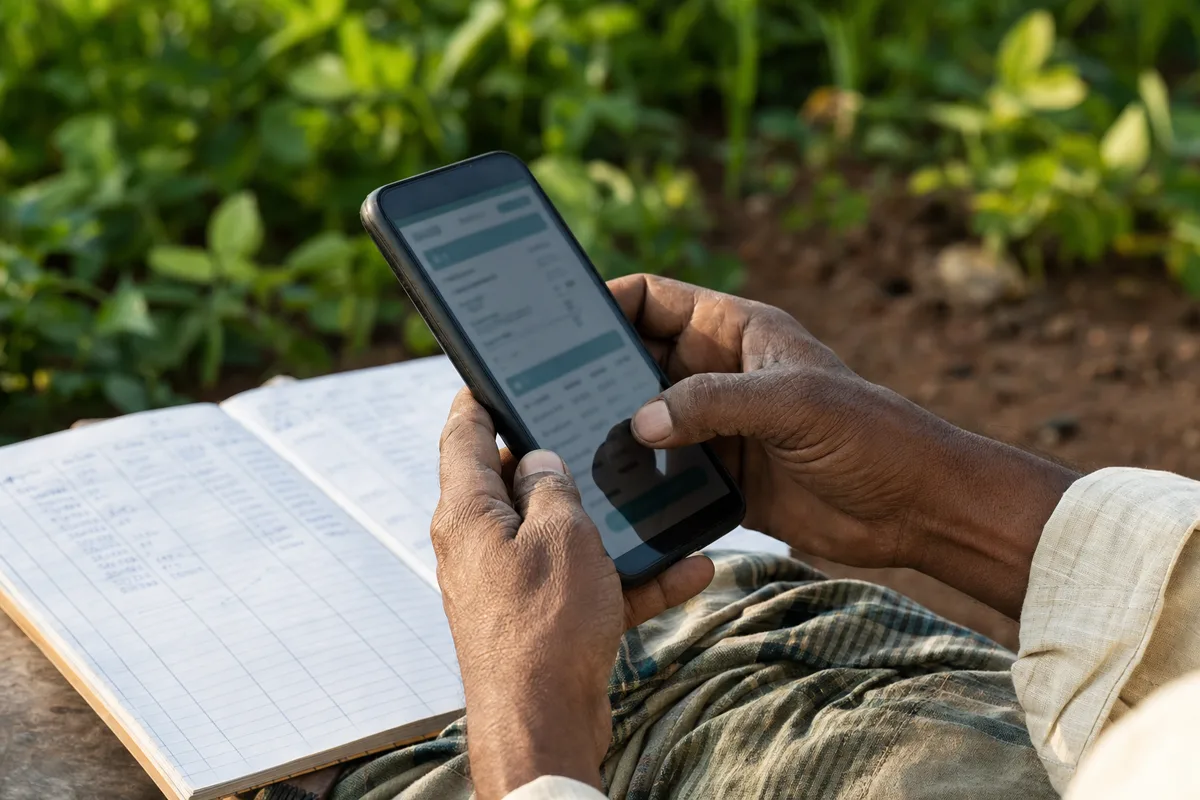
Data sharing is purpose-scoped, visible and revocable. No partner receives default ownership of the farmer relationship.
AI may summarise, detect and recommend. Credit, claims and eligibility outcomes stay human-controlled, explainable and appealable.
First-party and third-party experiences use equivalent APIs, data scopes, service levels and governance rules.
Shared APIs, canonical data and configurable workflows make the next district or partner faster to onboard.
Field and FPO-assisted journeys support low-bandwidth realities instead of assuming every farmer is always connected.
Consent decisions, role grants, approvals and data access write append-only audit events.
Working today
Every capability below is live and reachable once you are signed in with the right role. Access is purpose-scoped and server-enforced.
Five-year cropping history with input costs, yield, revenue, district benchmarks and MSP overlay.
Members, aggregation, procurement, produce lots, ledgers, schemes and consent-scoped member insight.
Cover reconciliation, risk surveillance and claims workflow where every decision keeps a human author.
Configurable scheme definitions, farmer-facing eligibility discovery and human review queues.
Season records captured without signal, queued on device and replayed idempotently on reconnect.
CACP MSP and PMFBY rate tables with field-level provenance, so every number states its source.